
Officer-Involved Shooting Results in $18.75M Verdict
Ten years after Mansur Ball-Bey was shot in the back by St. Louis police, the central question in the courtroom was not abstract. It was physical. The only witness for the victim was dead, all the other witnesses were cops, and there were many unanswered questions. Where was Ball-Bey when the bullet struck him? Where was the gun? What could the officers actually see? And could the official version of events survive when the movements, distances, and anatomy were reconstructed frame by frame?
That is where Focus Graphics’ animations became more than courtroom visuals. They became a way to test the story.
The case began on August 19, 2015, when St. Louis Metropolitan Police officers Kyle Chandler and Ronald Vaughan were executing a search warrant on Walton Avenue. Ball-Bey, 18, ran from the house. Police said they fired because he pointed a gun at officers. His family’s lawyers argued the opposite: Ball-Bey had discarded the gun and was unarmed when he was shot. The gun was found 162 feet from his body, and a bullet fired by Chandler entered Ball-Bey’s back, hit his aorta, and severed his spine.
For attorney Javad Khazaeli, representing the Ball-Bey family, the trial was a fight over credibility, physics, and memory. Jurors had to decide whether the officers’ description of a split-second threat matched the hard evidence left behind. Focus Graphics’ animations helped organize that evidence into a visual sequence jurors could follow: the pursuit, the relative positions of Ball-Bey and officers, the location of the gun, and the medical reality of a spinal injury caused by a bullet from behind.
In cases like this, animation does not replace evidence. It translates it. A courtroom can drown jurors in maps, deposition excerpts, expert testimony, autopsy language, and police diagrams. An effective trial animation gathers those pieces into a coherent demonstrative: not an argument pretending to be fact, but a visual explanation tethered to testimony and physical evidence.
That mattered because the city’s theory required jurors to accept a narrow chain of events: Ball-Bey allegedly posed an immediate threat with a gun, officers fired, and the later physical evidence could still be reconciled with that account. The family’s lawyers used expert testimony to challenge that. Khazaeli pointed specifically to the spinal injury, saying an expert explained that a fully severed spine results from forces such as bullets, knives, or buildings — not from officers piling onto someone after a chase.
The animation’s force was likely in making that conflict visible. Jurors were not merely told that the gun was far away from the body or that the bullet entered from behind. They could see why those facts mattered together. They could watch the competing storylines collapse or hold up against the geometry of the scene. Plaintiff provided two animations to the jury. The first was the cops’ version. It showed the ridiculousness of their story that would have required Ball-Bey to throw a gun against the direction he was running, over the cops’ heads so that it could land on the ground and make an immediate 90 degree turn to end up where it was found. The animation also showed the absurdity of a person with a hole in his aorta and a severed spine running over 100 feet before collapsing. The second was the Plaintiff’s version which included the forensic location of the cops’ bullet casings, the manner in which Ball-Bey complied and ditched the gun, and the exact location he was shot while unarmed.
The jury ultimately sided with the Ball-Bey family. In January 2025, after a five-day federal trial, jurors deliberated for 90 minutes and awarded $18.75 million: $3.75 million in compensatory damages on the excessive force claim, $2.5 million in compensatory damages on wrongful death, and $12.5 million in punitive damages across the two claims.
The verdict also showed that the visual presentation helped clarify the trial’s central factual dispute. In post-trial rulings, the court noted that the jury rejected Chandler’s claim that Ball-Bey was pointing a gun toward Vaughan when he was shot. Instead, the jury found the evidence better supported the family’s version: that Ball-Bey had thrown the gun away and was running when Chandler shot him in the back.
That finding is the story behind the story. The animation was not just a polished exhibit. It was a juror’s roadmap through a decade of official explanations, forensic disputes, and legal maneuvering. It helped reduce the case to the question that mattered most: was Mansur Ball-Bey a threat at the moment deadly force was used?
Even after the verdict, the fight did not end. St. Louis Public Radio reported in August 2025 that the nearly $19 million award still had not been paid and that the city was seeking a new trial. Khazaeli accused city attorneys of trying to damage Ball-Bey’s reputation by emphasizing excluded material about alleged gang affiliation and drug use.
But the courtroom results already marked a rare moment of accountability. A federal jury reviewed the evidence and concluded that the official story did not fit. Focus Graphics’ animations helped the family’s legal team make that evidence understandable, memorable, and difficult to dismiss. In a case built around seconds, inches, and trajectories, seeing was not decoration. It was proof made legible.
“We could not have won our case without the animation created by Focus Graphics. The animations laid bare the absurdity of the police story. They were instrumental in helping us obtain justice for Mansur Ball-Bey’s family. This was a case where the details mattered — positioning, timing, distance, trajectory, and the physical evidence all had to be understood clearly by the jury.
Focus Graphics took a complex set of facts and transformed them into a powerful, accurate, and easy-to-follow visual presentation. Through several iterations, Focus Graphics was a pleasure to work with. The animation did not just help explain our case; it helped the jury see why the evidence supported our position. Its accuracy and impact were so strong that the animation was admitted as evidence and went back with the jury during deliberations. That is an extraordinary measure of credibility and usefulness in a courtroom setting. In a case of this importance, the ability to present the truth clearly can make all the difference. Focus Graphics helped us do exactly that.”
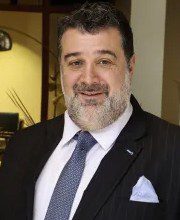
~Javad Khazaeli, Esq., St Louis, MO | Khazaeli Wyrsch Law
READY TO FIND OUT MORE?
Our team of animators, illustrators and medical professionals are ready to make your demonstratives ready for your next mediation or litigation. Request a Quote or give us a call at (702) 849-0090.
